Join our virtual event
Operational resilience, third-party risk management and cyber security are central to how financial institutions protect trust, stability and client outcomes. Recent years have shown how quickly a single failure can spread. The CrowdStrike update in 2024 and major hyperscaler outages in 2025 disrupted firms across the sector, while geopolitical tension and artificial intelligence (AI)-enabled attacks are shrinking the time firms have to detect, respond and recover.

Risks no longer sit neatly in separate categories. Cyber, technology, data, third-party and geopolitical risks interact and amplify one another, and growing reliance on a small number of critical providers means resilience depends on dependencies firms cannot always see. As regulators move to oversee critical technology providers directly, and expect firms to evidence resilience rather than simply document it, firms must understand their full supply chain, test against severe but plausible scenarios and be clear on who owns concentration risk.

This Deep Dive brings together practitioners and industry experts to explore how firms can build operational resilience in an interconnected risk environment, confront concentration risk across the supply chain, and prepare for an AI world, with practical takeaways for moving from resilience that is documented to resilience that is defensible and demonstrable.

What is New for this Year: Collaboration with the Financial Markets Standards Board (FMSB)

Our opening debate is produced in collaboration with the FMSB and builds on its Spotlight Review, Non-Financial Risk (NFR): An Enterprise-Wide Risk Management Approach, published in August 2026. Developed by the FMSB’s practitioner-led NFR Working Group, chaired by Citi’s Darren Jarvis, the review sets out the principles of effective NFR management and shares practical insights from industry practitioners.

Inside the review
  • Where ownership of non-financial risk should sit, and why fragmented accountability lets issues recur
  • How firms balance controls with judgement, and why adding controls alone doesn’t improve decisions
  • How risks introduced early, through product design, onboarding or outsourcing, can crystallise later across several risk types
  • A three-stage development pathway for peer benchmarking
  • Case studies, including a system outage where a cyber compromise can’t be ruled out

About the FMSB
The FMSB is a private sector, market-led organisation created following the 2015 Fair and Effective Markets Review. It brings together senior market participants to develop standards, statements of good practice and spotlight reviews for the global community.

What to Expect

  • Connect with Global Experts: Engage with industry leaders to discuss strategies for building resilience, managing cyber threats and mitigating third-party risks.
  • Gain Regulatory Insights: Understand the latest regulatory expectations on operational resilience, cyber security and third-party risk management.
  • Tackle Key Challenges: Discuss with senior practitioners the barriers to supply chain visibility, managing concentration risk, securing third-party relationships and adapting to emerging threats.
  • Leverage Technology and AI: Learn how artificial intelligence, automation and cyber security innovations are transforming resilience and risk management strategies.

Debates

Sessions where four or five Managing Director-level practitioners discuss and debate a particular topic or issue. Panel debates are a great way to explore complex topics and get multiple perspectives on a subject.

  • Building Operational Resilience in an Interconnected and Complex Risk Environment
  • Confronting Concentration Risk Across the Supply Chain
  • Resilience in an AI World

Roundtable Discussions

Private, off the record roundtables are moderated by leading practitioners in the field of resilience, cyber & TPRM and are designed to promote dialogue and collaboration among the attendees.

  • Embedding Resilience in BAU Operations
  • Ensuring Continuous Proactive Weakness Identification
  • Ensuring Data Security in an Increasingly Unsecure Environment 

Who should attend?

Managing Director, Directors and Heads of:
  • Resilience
  • Cyber
  • Third Party Risk Management
  • Operational Risk
  • Chief Control Officers
  • 1st Line
  • Supervision
  • Risk Assessment
  • Control Testing
  • Supervision
  • Supply Chains
  • Control & Supervision
  • Business Control Unit
  • Business Risk Management
  • Business Assurance
  • COOs and Business Managers (Front Office) with a control mandate
  • Front Office Risk and Control
  • Front Office Control & Remediation
  • Front Office Policy Governance
  • Front Office Control change
  • Business Operational Risk Management
  • Operational Risk Management
  • And Compliance and Audit practitioners who are interested
    in interoperating with their colleagues in the resilience

How the Deep Dives and Annual Reports work
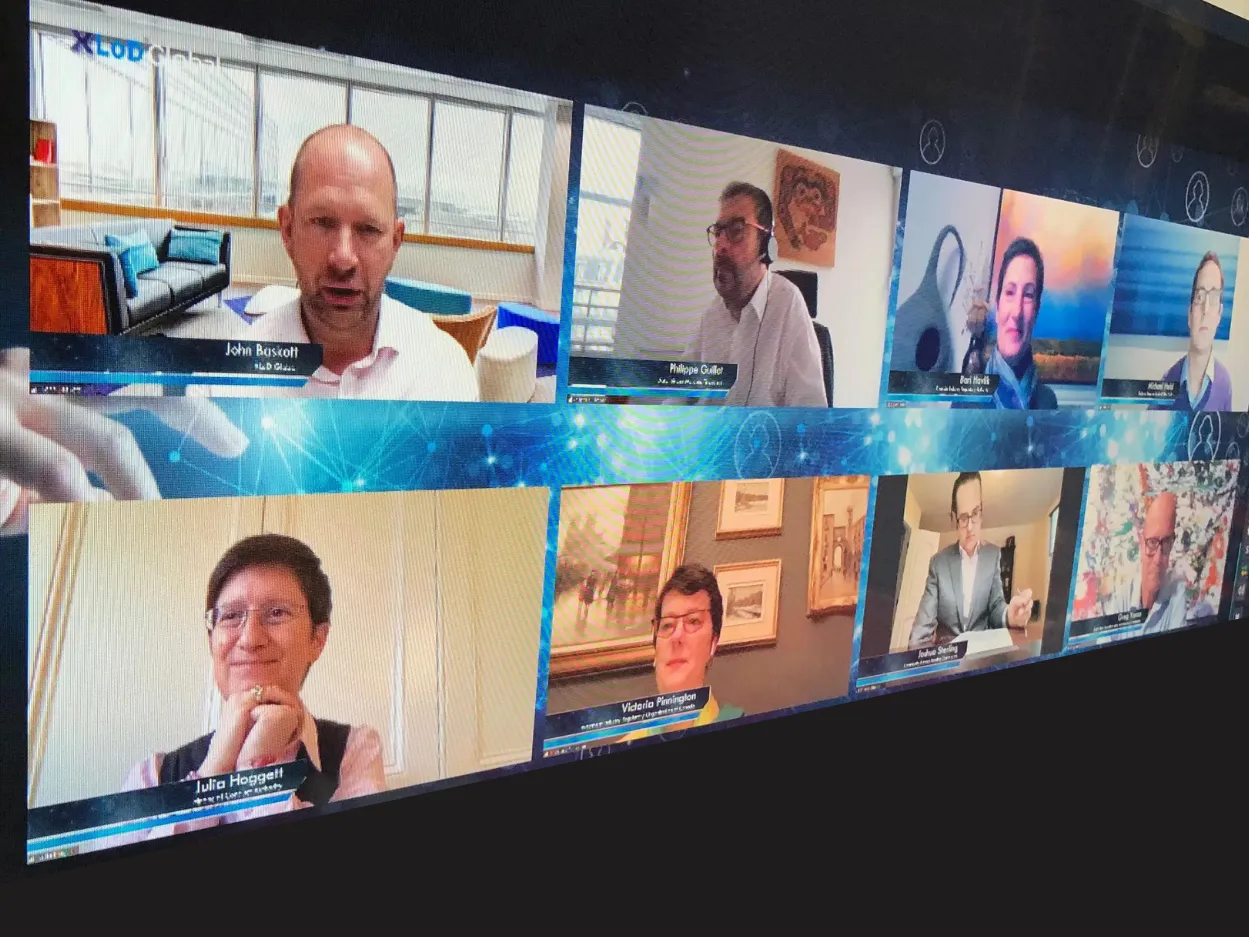
Networking

Deep Dives offer virtual interaction through an intra-delegate messaging system, opportunities to pose questions to speakers in real time, and interactive roundtable discussions.

Chatham House Rule applies, creating a safe environment for a free discussion and no press attend.
Networking
1LoD reports

Annual Report

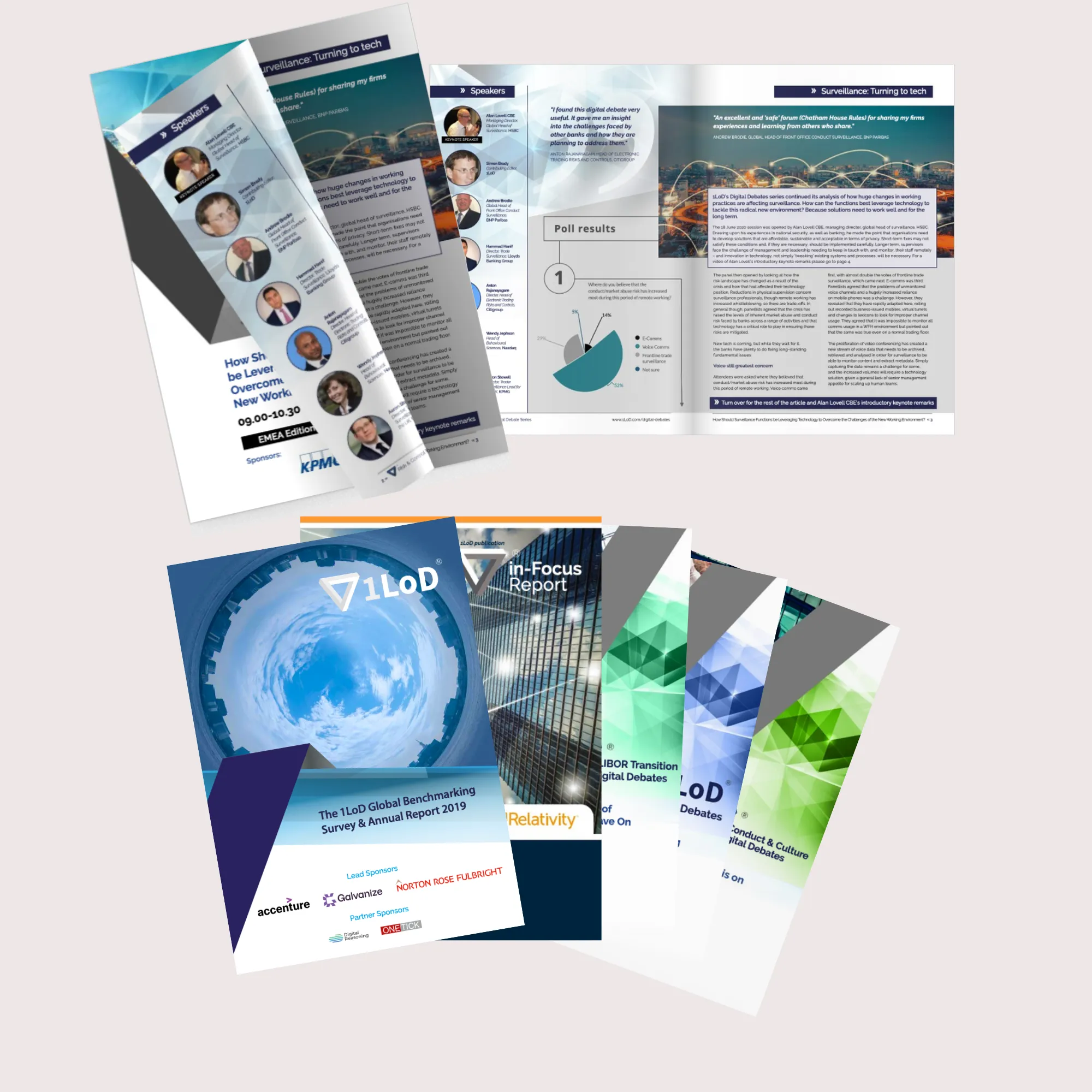
Deep Dives are 1LoD's annual update on a non-financial risk function or topic. Content is presented in a 6- or 8-page report which summarises 4 hours of debate between 16 practitioners at Managing Director level who are leaders for their functions, often joined by the relevant regulators

Roundtables

Private, off the record roundtables are moderated by 1LoD, and attended by delegates from financial institutions who have booked their place in advance. They take place on Zoom. Delegates are sent discussion topics, and an overall structure of the debate in advance to assist the flow of the discussion.
Interactive Roundtables
Join the Conversation

Why sponsor the Annual Report?

Deep Dives provide the industry with an annual update on the latest trends and thinking on the function or topic in focus. They:

• Generate Demand
• Gather Intelligence
• Raise Your Profile
• Create Content

Upcoming Events